



Voice recorder for caregiving and medical appointments
Wear it in. Capture the consultation. Share what the doctor said with your whole care team.
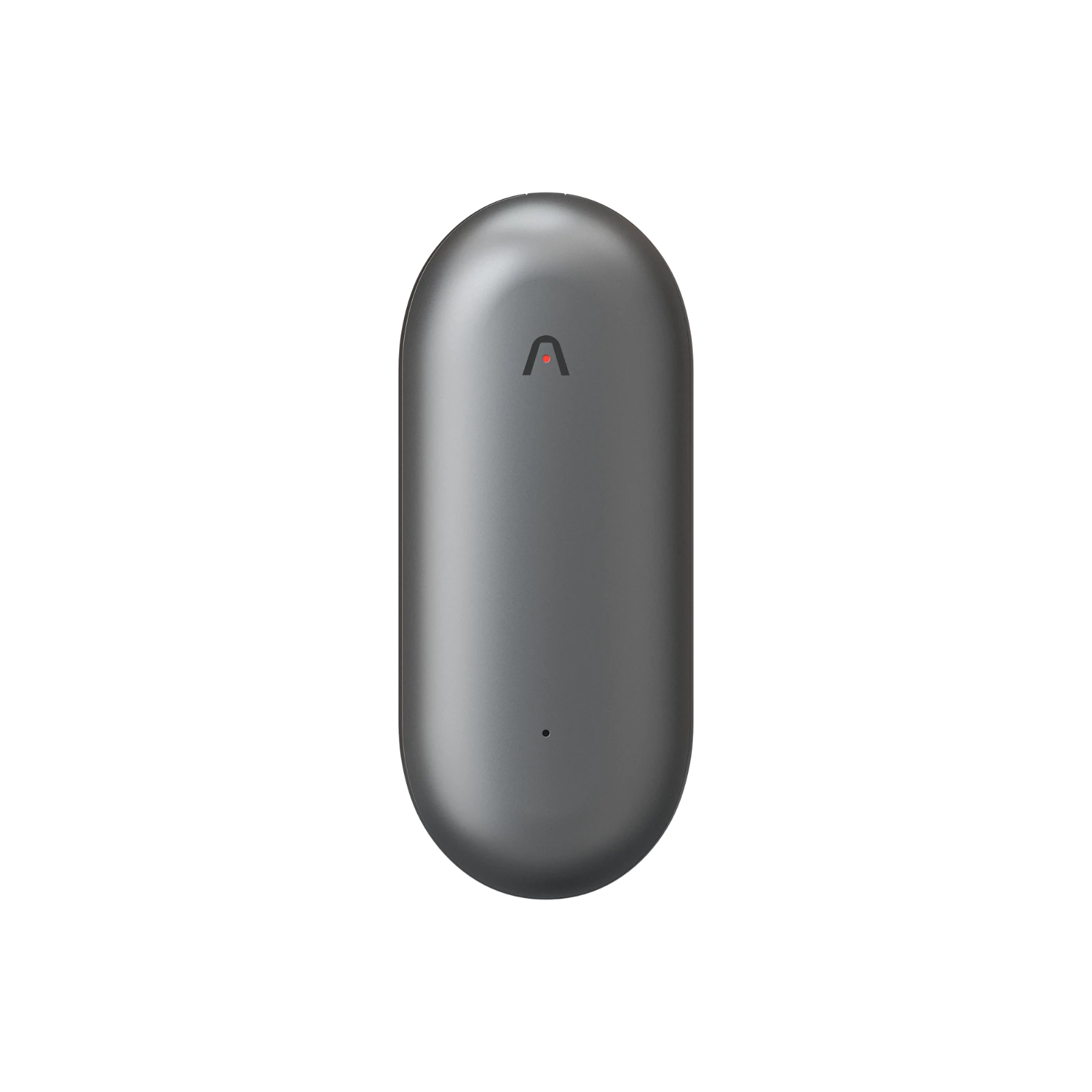
Plaud NotePin S is a wearable voice recorder built for caregivers and patients at medical appointments. Clip it to a lanyard or clothing, inform your doctor, and record the full consultation hands-free. Walk out with a complete transcript. Share it with family members and the wider care team the moment the appointment ends.
Trusted by 2M+ users globally since 2023

What a wearable voice recorder does differently at medical appointments
Every consultation captured. Nothing to hold. Nothing to write.
Plaud NotePin S is a wearable AI recorder designed for situations where your hands and attention are already occupied. Phone apps require you to hold the device toward the doctor the entire time. A notebook means writing while trying to listen. Plaud NotePin S clips to a lanyard, wristband, or clothing at 17.4 g. Inform your doctor before starting. Then focus entirely on the conversation. The full transcript is ready when the appointment ends, ready to share with the whole care team.
3 artifacts, ready when the appointment ends
Speaker-labeled transcript
Every word your doctor said, attributed and timestamped. Read the full consultation text anytime, search for any medication name or instruction, and share it with family members who were not present.
AI caregiver summary
Diagnosis notes, medication names and doses, follow-up instructions, and next appointment dates extracted automatically from the conversation.
Private on-device storage
64GB internal storage keeps recordings on the device. Nothing is uploaded in the background. You control when the audio is processed.
Works across all caregiving and medical appointment types
Plaud NotePin S clips to a lanyard or clothing. Always inform everyone in the conversation and confirm consent before recording.
Workflow fit
Is Plaud NotePin S the right voice recorder for caregiving and medical appointments?
Most caregivers and patients try to take notes during a consultation or rely on memory afterward. Both approaches miss details. Check whether recording fits your situation.
Built for your role
Built for caregivers and patients who need to capture every medical conversation
Pick the role closest to yours.
Family caregiver accompanying a parent
Pain
You attend appointments to support your parent, but siblings and other relatives who could not come also need to know what the doctor said. Memory and handwritten notes are not reliable enough for medical information. Medication names, doses, and follow-up dates get misremembered.
How Plaud helps
Inform all participants and confirm consent before starting. Plaud NotePin S records the full consultation. After the appointment, export the AI summary or full transcript from the Plaud App and share it with everyone who needs the information. One accurate record for the whole family.
Best output
AI summaryPatient managing a chronic condition
Pain
A doctor's explanation covers diagnosis updates, treatment options, medication changes, and follow-up steps in a single appointment. It is too much to absorb when you are already stressed. Writing notes while listening means missing parts of the explanation.
How Plaud helps
Inform your doctor and confirm consent before recording. Plaud NotePin S clips to clothing and records hands-free. The full consultation transcript is readable afterward, any time, including every medication name, dose, and instruction exactly as stated.
Best output
Full transcriptHome health aide or social worker
Pain
Care coordination involves multiple conversations each day: care planning calls, family updates, specialist referrals, and insurance discussions. Notes written by hand during a call miss details and take time after every conversation.
How Plaud helps
Inform all parties and confirm consent before recording. Plaud NotePin S captures the full conversation. The Plaud App delivers a structured summary ready to share with the care team without re-listening to the audio.
Best output
Care summaryHow it works as your voice recorder for caregiving and medical appointments
How Plaud NotePin S captures your medical consultations
Compliance & trust
Record medical appointments safely and legally
Recording medical appointments — know the consent laws
Recording medical appointments requires understanding the consent laws in your state. Many states require only one-party consent. Some require all-party consent. Always inform your doctor before recording. Check your local laws and any clinic policy before you begin.
Privacy by design
Plaud NotePin S stores recordings on 64GB internal storage. Audio stays on-device until you choose to process it. No background uploads and no audio sent to third-party servers during the appointment.
Encrypted storage
AES-256 encryption protects recordings in transit and at rest. Designed to be compatible with HIPAA privacy requirements for personal health recordings. Your medical audio is never used to train AI models.
Consent disclosure beep
A built-in disclosure beep plays at the start of each recording. The Plaud App includes a consent prompt to help you inform everyone in the conversation before you begin.
Why caregivers switch
Why caregivers searching for a voice recorder for medical appointments choose Plaud instead
Based on how caregivers and patients try to capture medical conversations, these are the three approaches people came from and the reasons they switched to a dedicated AI voice recorder.
Switched from
Phone voice memos held during the appointment
Most common starting point for patients and caregivers
"I held my phone toward the doctor the whole time. It felt awkward and I kept worrying about whether the audio was picking up. I could not focus on what was actually being said."
Why they left
- Requires holding the phone toward the doctor throughout the consultation
- Awkward and conspicuous in a clinical setting
- Audio only. No transcript, no medication summary, no follow-up list
What Plaud does instead
- Plaud NotePin S clips to a lanyard and records without holding anything
- Nothing to hold means full attention on the doctor's explanation
- Full transcript and AI summary ready when the appointment ends
Switched from
Written notes taken during the appointment
Traditional approach for remembering medical advice
"I tried writing everything down while the doctor was explaining. I missed half of what was said because I was too focused on getting the words right. The notes I had were incomplete anyway."
Why they left
- Writing while listening is difficult in a stressful consultation
- Key details, drug names, and doses often get missed or written incorrectly
- Impossible to capture the full conversation verbatim with handwriting
What Plaud does instead
- The transcript captures everything verbatim, including medication names spelled correctly
- No split attention between writing and hearing what the doctor says
- Searchable text is easier to reference later than handwritten notes
Switched from
Memory alone after the appointment
What most caregivers rely on without a recording tool
"By the time I got to the car I had already forgotten half of it. I remembered the broad strokes but not the specific medication doses or when exactly the follow-up was supposed to be."
Why they left
- Patients and caregivers forget a large proportion of medical information within minutes of leaving
- Stress during the appointment reduces retention further
- No reliable reference for medication names, doses, or follow-up dates
What Plaud does instead
- The transcript is a reliable, searchable reference for every detail the doctor stated
- Medication names, doses, and follow-up dates captured verbatim
- Share the summary with family or the wider care team without relying on your own recall
Stop trying to remember. Start reading what your doctor actually said.
Get Plaud NotePin S built for caregiving and medical appointment recording.
Customer stories
What Plaud users say about capturing important conversations

“I paid $300 a year, and I make probably an extra couple thousand dollars a month in things I would have forgotten.”
Read story →
“It allows us to focus, speed up follow-up, close deals faster, and keep everybody aligned.”
Read story →
“This is my administrative assistant. This is what takes my notes, gives me my to-do list, tasks, and management.”
Read story →Real Plaud customers. Full stories at plaud.ai/blogs/user-story.
Recommended devices
Choose the right voice recorder for caregiving and medical appointments
Pick the form factor that fits how you attend medical appointments.
If you...
Need a hands-free wearable that records in-person appointments without holding anything
If you...
Handle telehealth calls, phone consultations, and care coordination calls throughout the day
If you...
Want a compact recorder that attaches to your phone for calls with medical staff

wearable AI recorder
Plaud NotePin S
Best for hands-free in-person appointment recording
- 17.4 g wearable design, worn as lanyard, wristband, clip, or magnetic pin
- 20hr battery covers a full day of appointments
- 64GB internal storage, HIPAA-compatible design

physical AI note taker
Plaud Note Pro
Best for telehealth and care coordination calls
- 50hr battery, 4 MEMS mics with 5m pickup range
- Smart Dual-Mode for phone calls and in-person recording
- 2.99mm thin, sits flat on any surface

AI voice recorder
Plaud Note
Best for phone calls with medical staff
- Pocket-sized, attaches to your phone for call recording
- 20hr battery
- One-tap recording for calls with doctors or pharmacists
30-day money-back
1-year warranty
Lifetime support
Which voice recorder is free on iPhone?
iPhone Voice Memos is free and captures clean audio. It does not produce a transcript, summary, or caregiver notes. For medical appointments where you need a structured record after every consultation, Plaud NotePin S adds AI transcription and summarization at $179 as a one-time purchase with no required subscription.
Which voice recorder is best?
The right choice depends on how you use it. For hands-free in-person appointments, a wearable like Plaud NotePin S removes the need to hold anything. For telehealth and phone consultations, Plaud Note Pro uses Smart Dual-Mode to detect the call type automatically. Both produce a full transcript and AI summary after each session.
Which is the best voice recorder to buy?
For caregivers and patients who need coverage across in-person appointments, phone calls, and coordination meetings, Plaud NotePin S is the strongest option for hands-free recording. The one-time purchase includes AI transcription and summarization. A Plaud Pro Plan ($99.99/year) unlocks unlimited AI minutes for high-volume use.
Is it legal to record a doctor's appointment?
Recording laws vary by state. Many US states require only one-party consent. Some require all-party consent. Always inform your doctor before recording. Check your local laws and any clinic policy before you begin. Plaud's built-in disclosure beep plays at the start of each recording to help cover the notification step.
How do I share recordings with family members?
After the appointment, open the Plaud App and export the transcript or AI summary. Send it directly to family members, your home health aide, or the wider care team. The full audio stays on the device for your own reference.
Can Plaud NotePin S record a telehealth appointment?
Yes. Plaud NotePin S records any audio source including phone calls and video calls played through a speaker. For telehealth calls you may prefer Plaud Note Pro, which uses Smart Dual-Mode to automatically detect phone calls and switch recording mode. Always inform the other party before recording any telehealth session.
Is my medical recording private?
Plaud NotePin S stores recordings on 64GB internal storage. Nothing is uploaded in the background during the appointment. You choose when to send the audio for AI processing. AES-256 encryption protects recordings in transit and at rest. Your audio is never used to train AI models.
Does Plaud NotePin S work for care coordination calls?
Yes. Plaud NotePin S records spoken conversations including phone calls played through a speaker. It works for coordination calls with nurses, social workers, and insurance staff. Always inform all parties and confirm consent before recording any call.
Related articles

5 Best AI Note Takers for Doctor Consultations in 2026
Compare the best AI note takers for doctor consultations in 2026. Find the right recorder for in-person visits, telehealth calls, and specialist appointments.
Read more →
6 Best AI Note Takers for Patient Consultations in 2026
The best AI note takers for patient consultations in 2026, covering clinical appointments, care coordination, and specialist visits.
Read more →
How Plaud.ai powers HIPAA-compliant AI medical transcription
How Plaud records and transcribes medical conversations with HIPAA-compatible privacy controls and encrypted on-device storage.
Read more →
5 Best AI Note Takers for Medical and Therapy Sessions in 2026
The best AI note takers for medical and therapy sessions in 2026. Compare recorders for clinical environments, patient conversations, and sensitive session notes.
Read more →Before you record: let everyone in the conversation know and get their consent. Recording laws vary by region. Many US states require all-party consent for medical appointments specifically. In all-party consent states, you must inform your doctor and get their agreement before you begin. Check your local laws and any clinic policy before recording any medical consultation. Plaud's built-in disclosure beep plays at the start of each recording to help cover the notification step automatically.